Portuguese
 English
 French
 German
 Japanese
 Russian
 Spanish

Understanding Suede: What Is It Exactly?
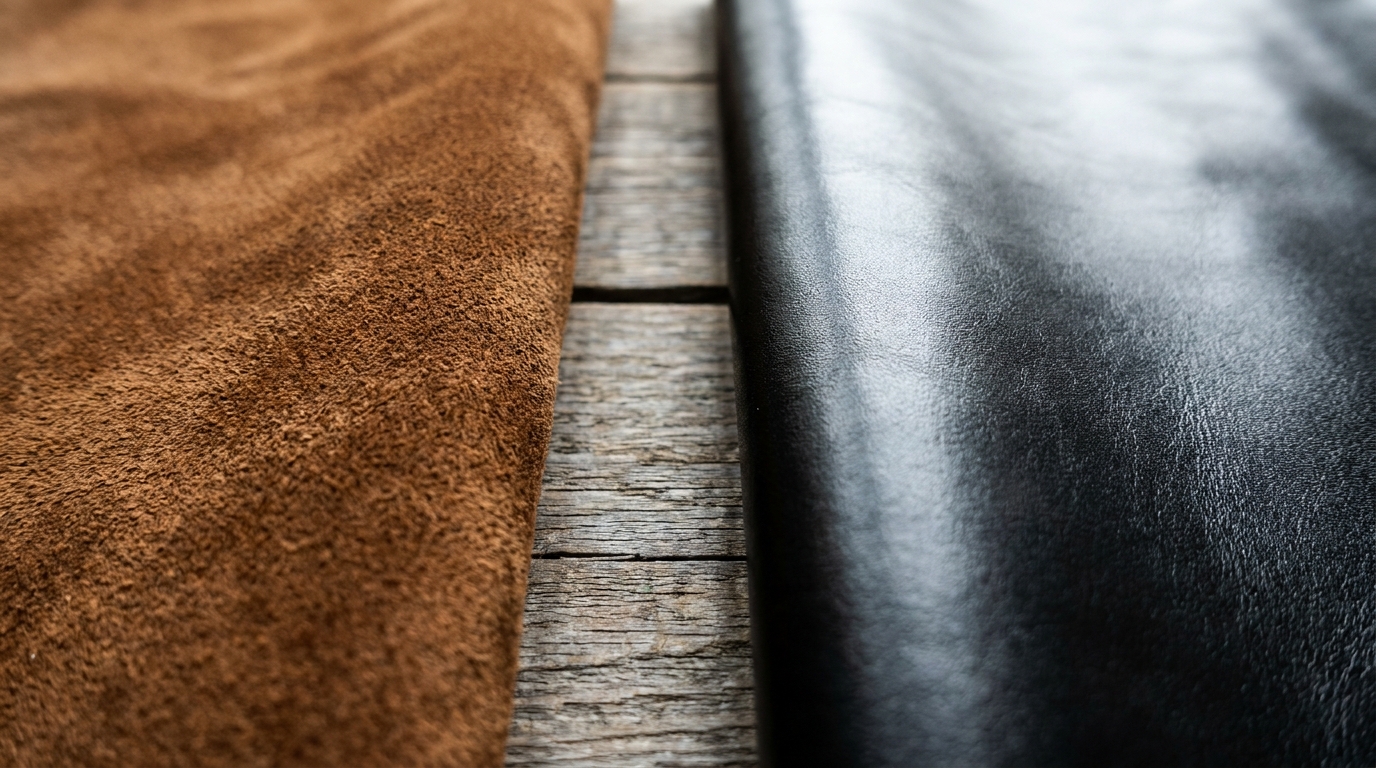
Genuine suede is a specialized type of leather derived from the inner flesh side, or split layer, of an animal hide. Manufacturers commonly use cow, lamb, sheep, and goat hides to produce this material.
Suede’s defining physical characteristic is its napped surface, which consists of countless short, fine fibers. Because of this unique structure, the material behaves differently than standard outerwear leathers.
How Suede Compares to Smooth Leather
The structural differences between suede and standard leather directly impact their appearance and application.
- Light Absorption: Smooth leather reflects light, creating a natural shine. Suede absorbs light, resulting in a distinctively matte finish.
- Color Depth: Because it absorbs light, dyed suede achieves an exceptionally rich color depth.
- Directional Nap: The fine fibers lay in a specific direction. Brushing or touching the nap in opposing directions alters the visual color shading.
The Manufacturing Process
Producing genuine suede requires a precise, multi-step manufacturing process.
- Tanning: The raw animal hide undergoes specialized tanning to preserve and soften the material.
- Splitting: The hide is carefully split to isolate the inner flesh layer from the smooth outer grain.
- Buffing and Abrading: The surface is heavily buffed or abraded. This friction raises the fine fibers to create the signature nap.
- Dyeing: The textured leather is dyed to achieve the final target color.
Working with this delicate material requires deep technical expertise. As a professional jacket manufacturer, Honry Apparel understands the precise handling required to transform raw tanned suede into premium outerwear.
Genuine Suede vs. Faux Suede Materials
Genuine suede originates from the split layer of natural animal hides. Faux suede is entirely synthetic. It is an engineered textile designed to replicate the velvety texture of real leather. Faux options include microfiber suede, suede-look woven fabrics, and bonded materials.
Performance and Care Differences
These material differences directly impact jacket performance. Genuine split leather offers better natural breathability but requires specialized dry cleaning to protect the delicate surface. Synthetic alternatives often provide better durability against moisture and are generally easier to clean. Because they are engineered textiles, faux materials typically lack the natural airflow found in animal hides.
| Characteristic | Genuine Suede | Faux Suede |
|---|---|---|
| Composition | Natural animal hide (split leather) | Synthetic (microfiber, woven, bonded) |
| Breathability | High natural airflow | Lower breathability |
| Care Requirements | Specialized dry cleaning only | Generally easier to spot-clean |
Specifying Materials in Production
Clear communication is essential when developing new outerwear. Designers must avoid using the generic term “suede” on tech packs or manufacturing orders. You must specify whether the garment requires genuine, split, faux, or microfiber suede.
Failing to clarify the exact material can lead to costly production errors, incorrect fabric sourcing, and flawed garment construction. A reliable manufacturing partner will always confirm the exact material type before finalizing your jacket pattern.
The Directional Nap: A Defining Feature of Suede Jackets
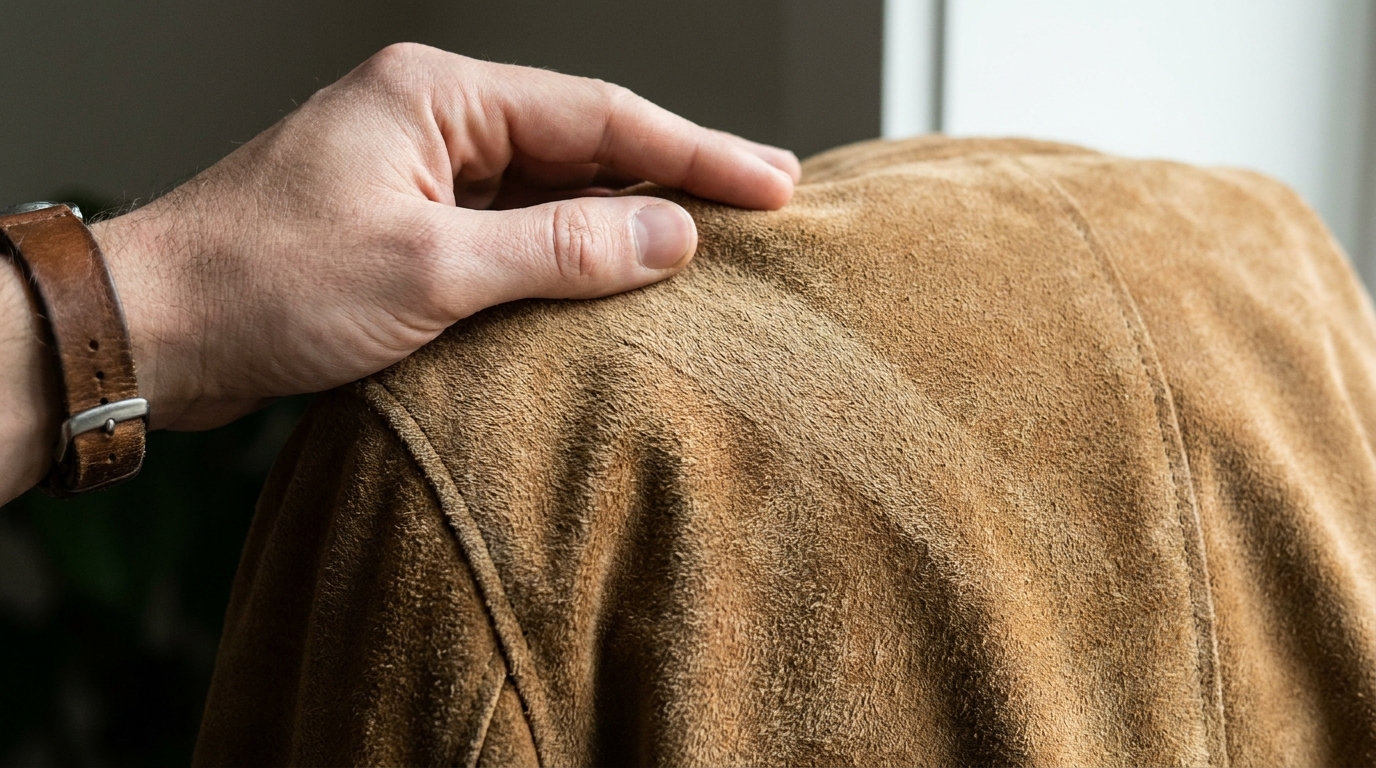
Suede features a unique napped surface that is highly directional. The short, fine fibers naturally lay in one specific direction. When you brush or touch the fibers against this grain, the material’s appearance changes. The disturbed fibers catch light differently, instantly altering the visible color shading.
Panel Cutting and Construction Rules
This directional behavior dictates how factories handle suede jackets during production. A critical rule applies to panel cutting: every single fabric piece must follow the exact same nap direction. If a manufacturer ignores this rule, the final garment will look flawed.
Warning: Sewing panels with opposing nap directions makes identical fabrics appear completely mismatched in color. Even slight deviations in the layout can ruin the jacket’s uniform appearance.
Quality Control and Shade Matching
Quality control requires strict shade matching across all garment panels. Because the fibers absorb light, digital screens cannot accurately display the true color depth. You should never approve suede color swatches based solely on a digital photo.
Physical shade matching is mandatory to ensure color consistency before bulk production begins. Honry Apparel implements rigorous physical shade matching protocols, leveraging over 30 years of manufacturing experience to ensure every panel perfectly aligns.
Popular Types and Styles of Suede Jackets
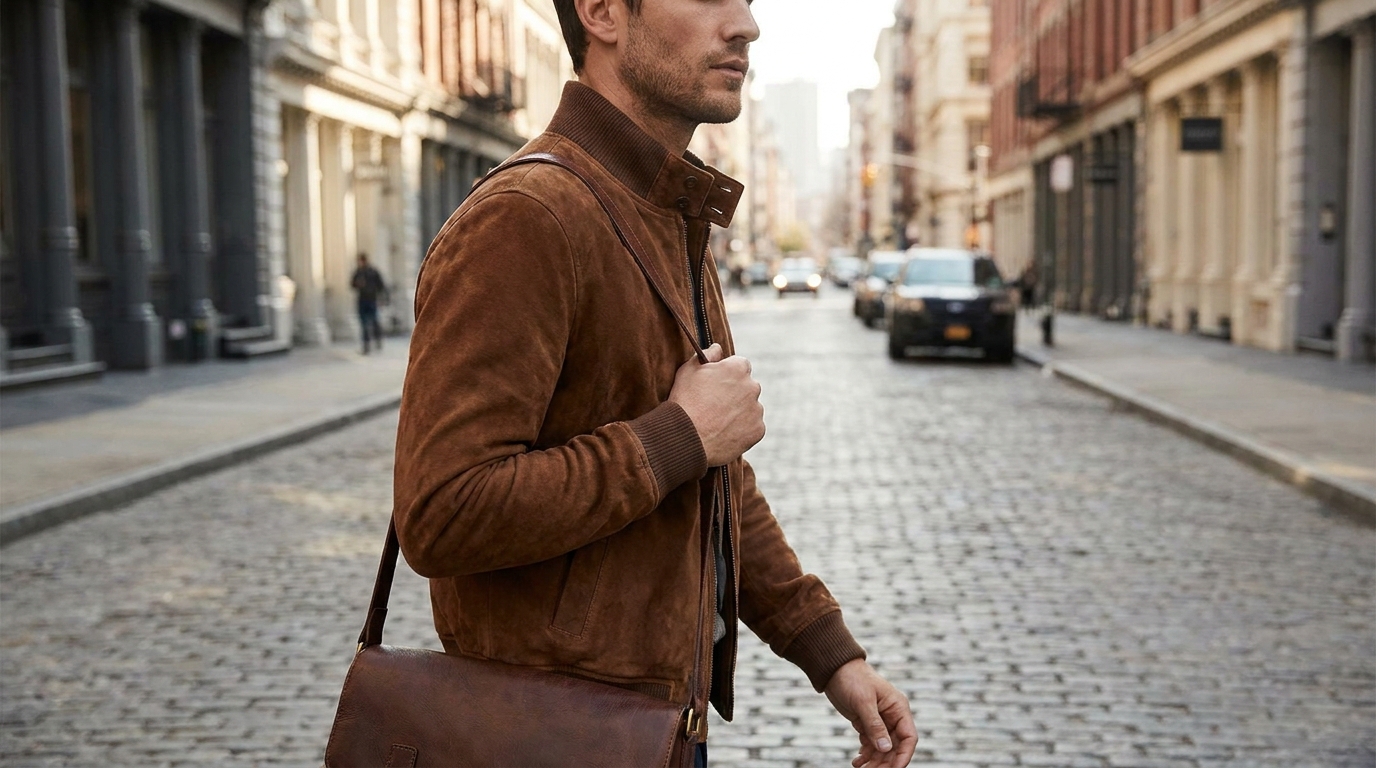
The velvety texture and rich color depth of suede elevate many classic outerwear silhouettes. Because the material drapes differently than smooth leather, it suits a wide variety of jacket styles. Designers frequently utilize this light-absorbing fabric to create both structured and relaxed garments.
Bomber and Aviator Jackets
Bomber and aviator styles remain timeless choices for suede outerwear. These classic silhouettes often feature ribbed trims, funnel-necks, or shearling collar details. The soft hand-feel of the napped surface pairs perfectly with the relaxed, rounded shape of a traditional bomber.
Trucker and Western Jackets
Trucker jackets offer a more structured, durable design. They are easily recognized by their front paneling, metal closures, and distinctive chest pockets. Suede trucker jackets frequently incorporate retro or western influences, leaning heavily into texture-led minimalism to create a versatile wardrobe staple.
Biker and Cafe Racer Jackets
A suede biker or cafe racer jacket provides a softer alternative to traditional smooth leather motorcycle jackets. These styles feature a sleek, minimal blouson shape tailored for a closer fit. The matte finish beautifully contrasts with metal zippers. However, heavy metal hardware should never be used on very soft, thin suede. Excess weight can easily distort the drape and damage the delicate fabric.
Overshirts and Blazers
Suede overshirts and blazers serve as excellent lightweight options, successfully bridging the gap between casual wear and formal attire. An overshirt utilizes thinner split leather or microfiber suede for comfortable layering. A tailored suede blazer brings a refined, textural element to smart-casual collections.
Pattern Considerations for Oversized Fits
Modern aesthetic trends often favor oversized zip jackets and relaxed fits. When designing these loose suede jackets, you must take a deliberate approach to garment construction.
Designers should never simply scale up a standard block pattern to achieve a baggy look. Instead, you must carefully adjust specific pattern proportions, such as shoulder drop and armhole depth. This ensures the garment drapes correctly without looking poorly fitted. Honry Apparel expertly handles these complex pattern adjustments to deliver flawless custom outerwear.
Manufacturing Considerations for Suede Outerwear
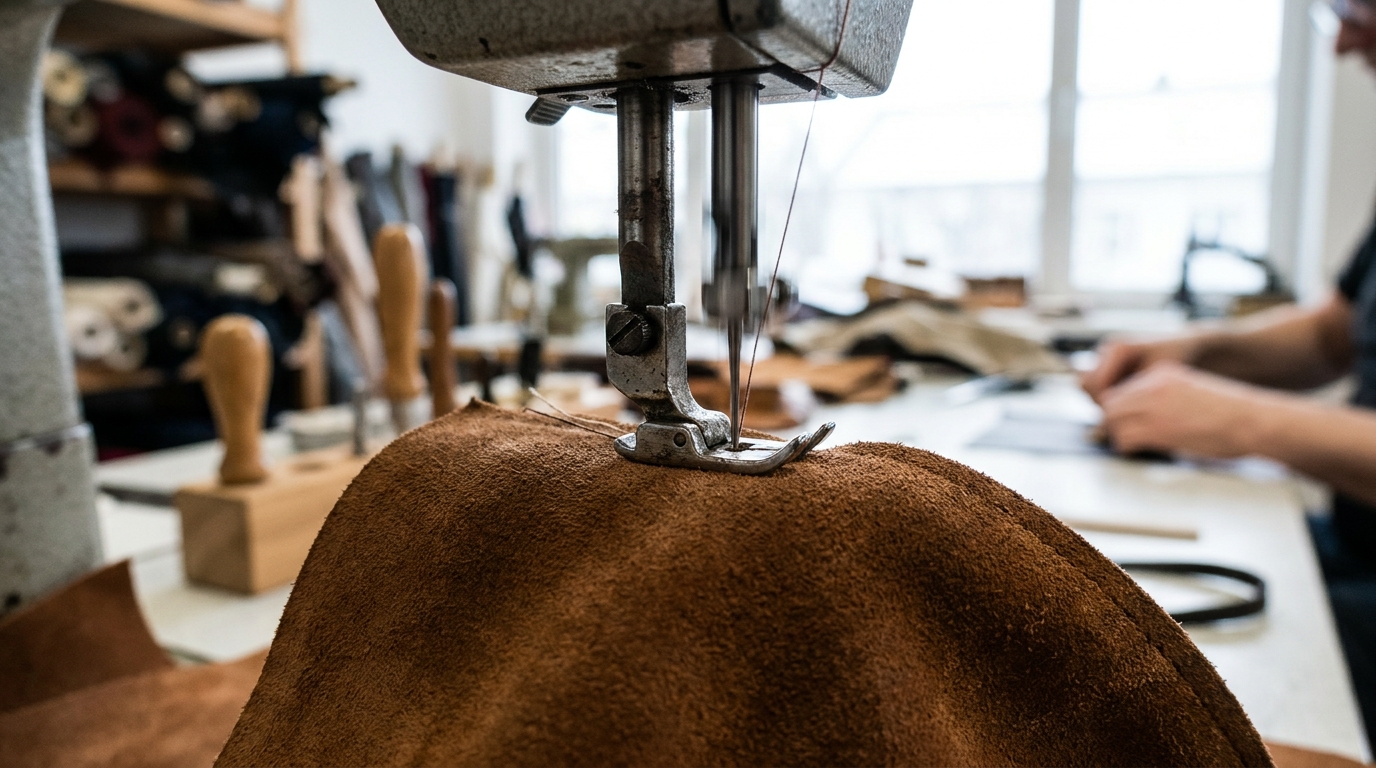
Moving from design to bulk production requires technical expertise. As a professional OEM/ODM clothing manufacturer, Honry Apparel implements strict quality control to handle these delicate materials. Producing suede jackets involves unique challenges compared to standard woven garments.
Hardware Selection and Weight
Selecting the right closures is critical for garment longevity. You must avoid heavy metal zippers or snaps on very soft, thin suede. Heavy hardware pulls on the delicate fibers, distorting the garment’s natural drape and potentially tearing the material over time. Manufacturers must carefully match the hardware weight to the fabric’s thickness.
Seam Construction and Stitching
Stitching genuine suede demands high precision. Unlike woven textiles, animal hides do not recover from punctures. Every needle strike creates a permanent hole in the split leather. Manufacturers must avoid repeatedly unpicking and resewing seams, as mistakes during panel assembly can easily ruin the entire piece. Factory technicians must verify patterns and machine tensions before beginning bulk production.
Pressing and Interfacing Rules
Synthetic alternatives require careful thermal management during assembly. Faux suede often reacts unpredictably to high heat. You should always test pressing techniques on scrap material first. This same rule applies when adding fusible interfacing. Testing prevents accidental melting or crushing of the synthetic nap before applying these methods to the mass-produced garment.
Lining and Structural Finishing
Proper finishing ensures a durable, comfortable jacket. While some lightweight overshirts remain unlined, most suede outerwear requires a dedicated inner lining. A high-quality lining protects the interior surface from friction and body oils. It also provides essential structural integrity, helping the jacket maintain its shape during daily wear.
Frequently Asked Questions About Suede Jackets
Is a suede jacket considered real leather?
Yes, genuine suede is a specific type of real leather. It is made from the inner flesh side or split layer of an animal hide, commonly from cows, lambs, sheep, or goats. Unlike smooth leather, which uses the outer hide, suede is heavily buffed to create its signature soft, napped texture. Faux suede jackets, however, are made from synthetic materials engineered to replicate real leather.
Why does a suede jacket change color when you rub or touch it?
Suede features a textured surface called a nap, consisting of short, fine fibers that lay in a specific direction. When you brush your hand against the grain, you disturb these fibers. Because suede absorbs light, the shifted fibers catch the light differently, instantly altering the visible color shading.
Does a suede jacket need an inner lining?
Most suede jackets require a dedicated inner lining, though some lightweight overshirts can be left unlined. A lining protects the delicate interior surface of the leather from friction, sweat, and body oils. It also provides essential structural support, helping the jacket maintain its tailored shape.
Why do panels on the same suede jacket sometimes look like different colors?
This occurs when a manufacturer ignores the fabric’s natural nap direction during production. Every piece of a suede jacket must be cut and sewn so the fibers lay in the exact same direction. If two panels are stitched together with opposing nap directions, they absorb light differently, making identical pieces of fabric appear mismatched.
Can faux suede jackets be safely ironed or pressed?
Faux suede is a synthetic material that reacts unpredictably to high heat. Ironing or pressing it without caution can melt, crush, or permanently damage the textured nap. If pressing is necessary, always test the heat and technique on a hidden scrap first. Using a pressing cloth and lower heat settings is usually required.
Conclusão
Suede jackets provide a premium matte finish and signature texture. Distinguishing genuine from faux materials is vital for accurate production, while flawless manufacturing requires precise shade matching and strict nap direction control. With over 30 years of garment manufacturing experience and a robust supply chain, Honry Apparel delivers reliable OEM/ODM outerwear solutions.
- Specify exact materials in your tech packs.
- Verify nap direction before pattern cutting.
- Contact Honry Apparel to start jacket sampling.