German
  English
  French
  Japanese
  Russian
  Spanish
  Portuguese
We’ve all been there: bundling up in a new coat, stepping outside on a frigid day, and realizing—too late—that it’s no match for the cold. A coat’s ability to keep you warm isn’t just about thickness or price; it’s a science of insulation, fabric, and design working together to trap heat and block the elements. Whether you’re facing sub-zero winds or damp winter chills, knowing how to evaluate a coat’s warmth potential before buying can save you from discomfort (and regret). In this guide, we’ll break down the key factors that determine a coat’s warmth, how to test them, and what to look for based on your climate and needs.
Understanding the Science of Warmth: How Coats Trap Heat
Before diving into specific features, it’s helpful to grasp the basics of how winter coats work. Warmth boils down to one principle: trapping air close to your body. Air is a poor conductor of heat, so the more air a coat can hold (and the less it lets that air escape), the better it insulates you from the cold. This is why fluffy materials like down or fleece are warmer than flat, dense fabrics—they create tiny pockets of air that act as a thermal barrier.
A coat’s warmth also depends on its ability to block external cold (wind, rain, snow) and regulate moisture (sweat, which can cool you down if trapped). A coat that fails at either—say, one with great insulation but a wind-permeable shell—will feel much colder than its specs suggest.
Key Factor 1: Insulation Type and Quality
The insulation inside a coat is the primary driver of warmth. Not all insulations are created equal, and their performance varies by material, density, and quality. Here’s how to assess them:
Down Insulation: Nature’s Warmth Champion
Down—those soft, fluffy clusters found under duck or goose feathers—is prized for its exceptional warmth-to-weight ratio. Its ability to trap air comes from the thousands of tiny filaments in each cluster, which expand (or “loft”) to create insulation.
- Fill Power: This is the most critical metric for down. Measured in cubic inches per ounce, it indicates how much the down can expand. Higher fill power (600–900+) means larger, more resilient clusters that trap more air. A 900-fill down coat will be warmer and lighter than a 500-fill coat of the same weight.
- Fill Weight: This refers to the total ounces of down in the coat. A coat with 800-fill power and 10 ounces of down will be warmer than one with 800-fill but only 5 ounces. Look for both numbers—fill power measures quality; fill weight measures quantity.
- Ethics and Treatment: Opt for down certified by the Responsible Down Standard (RDS) to ensure humane sourcing. Water-resistant down (treated with formulas like DownTek) retains warmth even when damp—a game-changer in light snow or drizzle.
Synthetic Insulation: Wet-Weather Warriors
Synthetic insulations (e.g., Primaloft, Thinsulate, 3M Thinsulate) are made from polyester fibers designed to mimic down. They’re less expensive and perform better than down when wet, making them ideal for damp climates.
- Weight and Density: Synthetic insulation is rated by weight per square meter (g/m²). Lightweight (40–80g/m²) works for mild winters (5°C to 0°C), mid-weight (80–120g/m²) handles -5°C to -10°C, and heavyweight (120–200g/m²) is for -10°C and below.
- Breathability: Look for “active” synthetics (e.g., Primaloft Gold Active) if you’ll be moving a lot (hiking, commuting). They wick moisture to prevent overheating, which keeps you warmer in the long run.
Natural Fibers: Wool, Shearling, and Cotton
Wool, shearling, and cotton blends offer warmth with natural breathability, though they work best in specific conditions:
- Wool: Wool fibers naturally crimp, creating air pockets for insulation. It retains warmth even when damp and resists odors. Look for thick, tightly woven wool (e.g., boiled wool) for colder temps (-5°C to 5°C).
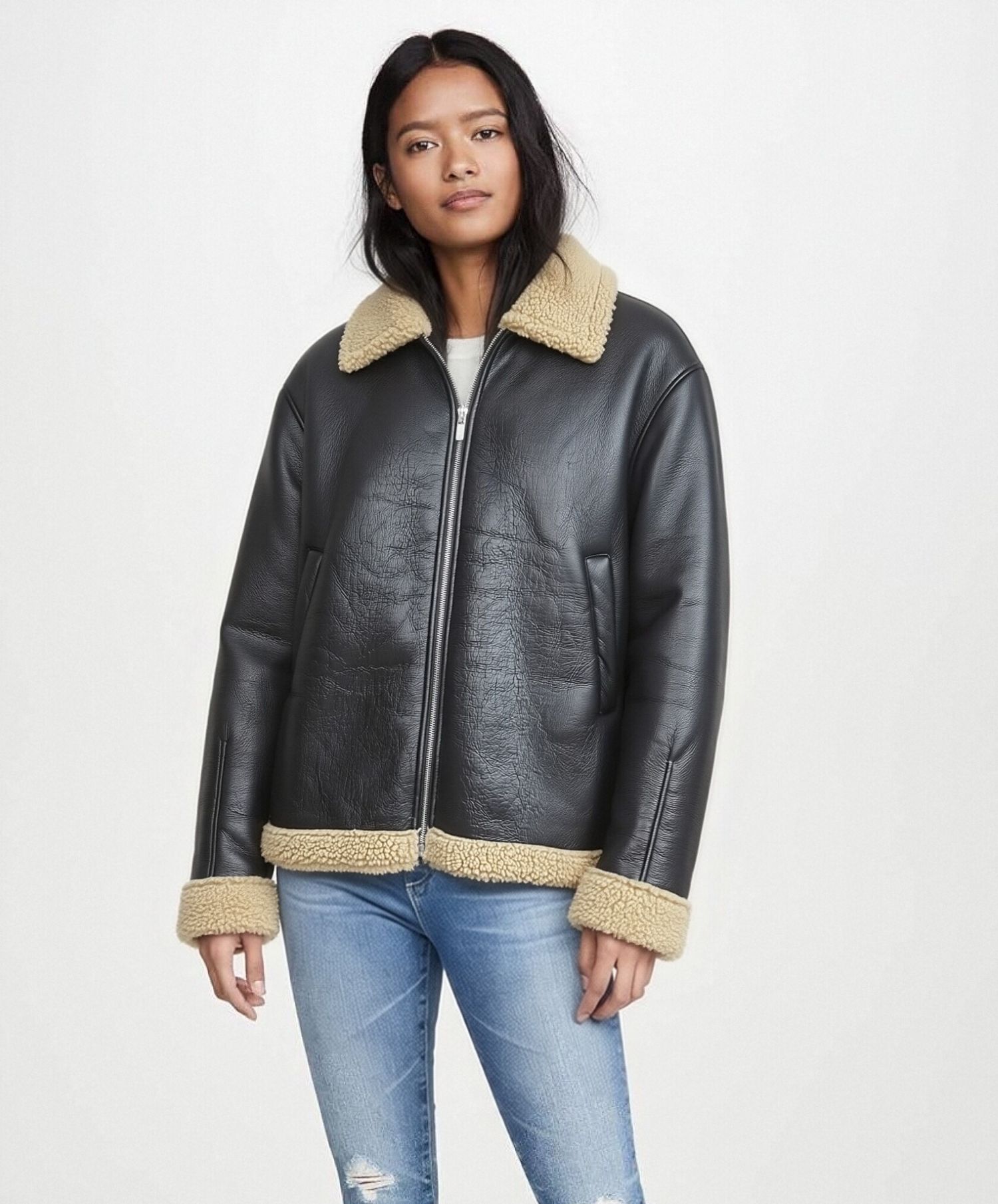
- Shearling: This combination of sheepskin and wool provides a dense, wind-resistant layer. It’s excellent for dry, cold climates (-10°C and below) but can feel heavy in humidity.
- Baumwolle: Quilted cotton coats offer lightweight warmth (best for 5°C to 10°C) but lose insulation when wet—save them for dry, mild winters.
Key Factor 2: Outer Shell and Weather Resistance
Even the best insulation can’t keep you warm if cold air, wind, or moisture penetrates the coat. The outer shell is your first line of defense:
Wind Resistance
Wind chill is a major factor in how cold you feel. A 0°C day with 30km/h winds feels like -8°C because wind strips away the warm air layer around your body.
- Winddichte Stoffe: Look for shells labeled “100% windproof” or made with tight weaves (e.g., ripstop nylon) or wind-resistant membranes. Test by holding the fabric up to your mouth and blowing—if air passes through easily, it’s not windproof.
- Storm Flaps and Seams: Zippers should be covered by storm flaps (fabric overlaps) to block wind. Taped or welded seams (instead of just stitched) prevent air from seeping through needle holes.
Water Resistance
Moisture—from rain, snow, or sweat—destroys insulation. Wet down clumps and loses loft; even synthetic insulation works less effectively when saturated.
- DWR Coating: A durable water repellent (DWR) finish on the shell makes water bead and roll off. Test by sprinkling water on the fabric—if it soaks in quickly, the coating is poor or worn.
- Waterproof Membranes: For heavy rain or snow, choose jackets with waterproof membranes (e.g., Gore-Tex, eVent). These are laminated to the shell and block liquid water while letting vapor (sweat) escape.
- Hood Design: A hood with a snug fit (adjustable via drawstrings or a wired brim) prevents snow or rain from entering the neckline. Fur or faux fur trim adds a wind-blocking seal around your face.
Key Factor 3: Fit and Coverage
A coat that’s too tight, too short, or poorly designed will let cold air in and warm air out—no matter how good the insulation is.
Length
- Hip-Length: Ideal for mild to moderate cold (5°C to -5°C) and active use (walking, driving). They balance warmth with mobility.
- Thigh-Length or Longer: Necessary for extreme cold (-10°C and below) or deep snow. They protect your lower body, where heat loss is common.
Fit
- Room for Layers: A coat should be loose enough to accommodate a sweater or fleece underneath without compressing the insulation (compressed insulation traps less air). Test by wearing a thick sweater when trying it on—you should be able to move your arms freely.
- Snug Closures: Cuffs with Velcro, elastic, or thumb loops seal around wrists. A drawstring or adjustable hem tightens around your waist to block drafts. Avoid coats with gaps at the neck—look for high collars or turtlenecks.
Key Factor 4: Climate and Activity Level
A coat’s “warm enough” threshold depends entirely on where and how you’ll wear it. A jacket that works for a Chicago winter won’t suit a London winter, and vice versa.
Climate-Specific Guidelines
- Extreme Cold (Below -10°C/-14°F): Prioritize high-fill down (700+), heavyweight synthetics (150g/m²+), or shearling. Pair with a waterproof, windproof shell. Look for features like fur-lined hoods and thigh-length hems.
- Cold and Wet (0°C to -10°C/32°F to 14°F): Choose water-resistant synthetic insulation or treated down. A waterproof membrane (Gore-Tex) is non-negotiable. Mid-thigh length balances coverage and mobility.
- Mild and Damp (5°C to 0°C/41°F to 32°F): Opt for lightweight synthetics (80–120g/m²) or quilted wool. A DWR coating handles light rain; avoid heavy insulation to prevent overheating.
- Windy Climates: Windproof shells are critical, even in mild temps. Look for adjustable hoods, storm flaps, and tight cuffs to block gusts.
Activity Level Matters
- Sedentary Use (Waiting for buses, office commutes): You generate less body heat, so prioritize maximum insulation (e.g., 800-fill down, heavy wool).
- Active Use (Hiking, skiing, running): You’ll sweat, so choose breathable insulation (e.g., Primaloft Active) and jackets with underarm vents. Avoid over-insulating—overheating leads to sweat, which chills you later.
How to Test Warmth Before Buying
You can’t always predict a coat’s performance from a tag. Use these in-store (or at-home) tests to gauge warmth:
- Check Loft: Fluff the coat—high-quality down or synthetic insulation should spring back quickly and feel light but puffy. Flat, dense insulation won’t trap as much air.
- Feel for Wind Penetration: Stand in a breezy area (or use a fan) and feel for drafts through the fabric. A windproof coat will block most air flow.
- Simulate Layers: Wear a sweater or hoodie when trying on the coat. If it feels tight, the insulation will compress, reducing warmth.
- Read Reviews: Look for feedback from people in your climate. A coat described as “perfect for Minnesota winters” is a better bet for cold regions than one praised for “mild Seattle days.”
- Check the Brand’s Temperature Ratings: Reputable brands (e.g., Patagonia, Canada Goose) provide temperature guidelines (e.g., “rated to -25°C”). Take these as a starting point—individual tolerance varies, but they’re better than guesswork.
Common Myths About Coat Warmth
Don’t fall for these misconceptions when evaluating warmth:
- “Thicker = Warmer”: A bulky coat with low-quality insulation (e.g., loose synthetic fibers) can be less warm than a lightweight 800-fill down jacket. It’s about air trapped, not thickness.
- “Fur is Always Warmer Than Down”: Fur is excellent for wind resistance but often heavier and less insulating than high-fill down in dry cold. Down has a better warmth-to-weight ratio.
- “Waterproof Coats Are Too Hot”: Modern waterproof membranes (e.g., Gore-Tex) are breathable—they let sweat escape, so you stay warm without overheating. A non-waterproof coat that gets wet will leave you colder.
Schlussfolgerung
Knowing if a coat will keep you warm enough comes down to evaluating insulation quality (fill power, weight, type), weather resistance (windproofing, water repellency), fit, and how well it matches your climate and activity level. By focusing on these factors—and testing when possible—you can avoid the “it looked warm but isn’t” trap.
Remember, the best winter coat is one that works with your environment: a lightweight, water-resistant synthetic for damp cities, a high-fill down parka for frozen tundras, or a wool blend for mild, dry winters. With this guide, you’ll be able to shop confidently, knowing your coat will keep you cozy—no matter how low the mercury drops.